#10940
Antimony
stibium, gray metallic, 0 - 200 µ

Buy Antimony:
Ordering information
Follow the safety information!
Own production Further products by Kremer Pigmente
Safety Information

GHS08-1
Health Hazard
Signal word: Warning
H373: May cause damage to organs through prolonged or repeated exposure.
H412: Harmful to aquatic life with long lasting effects.
P260: Do not breathe dust/fume/gas/mist/vapours/spray.
P273: Avoid release to the environment.
P280: Wear protective gloves/ clothing/ eye/ face protection.
P308+P313: If exposed or concerned: Get medical advice/attention.
P405: Store locked up.
Handling and Warnings
Antimony can be harmful to health if it comes into contact with the skin, is inhaled or swallowed. Please wear a dust mask and gloves when using the pigment! Wash your hands thoroughly after use. Do not eat, drink or smoke!
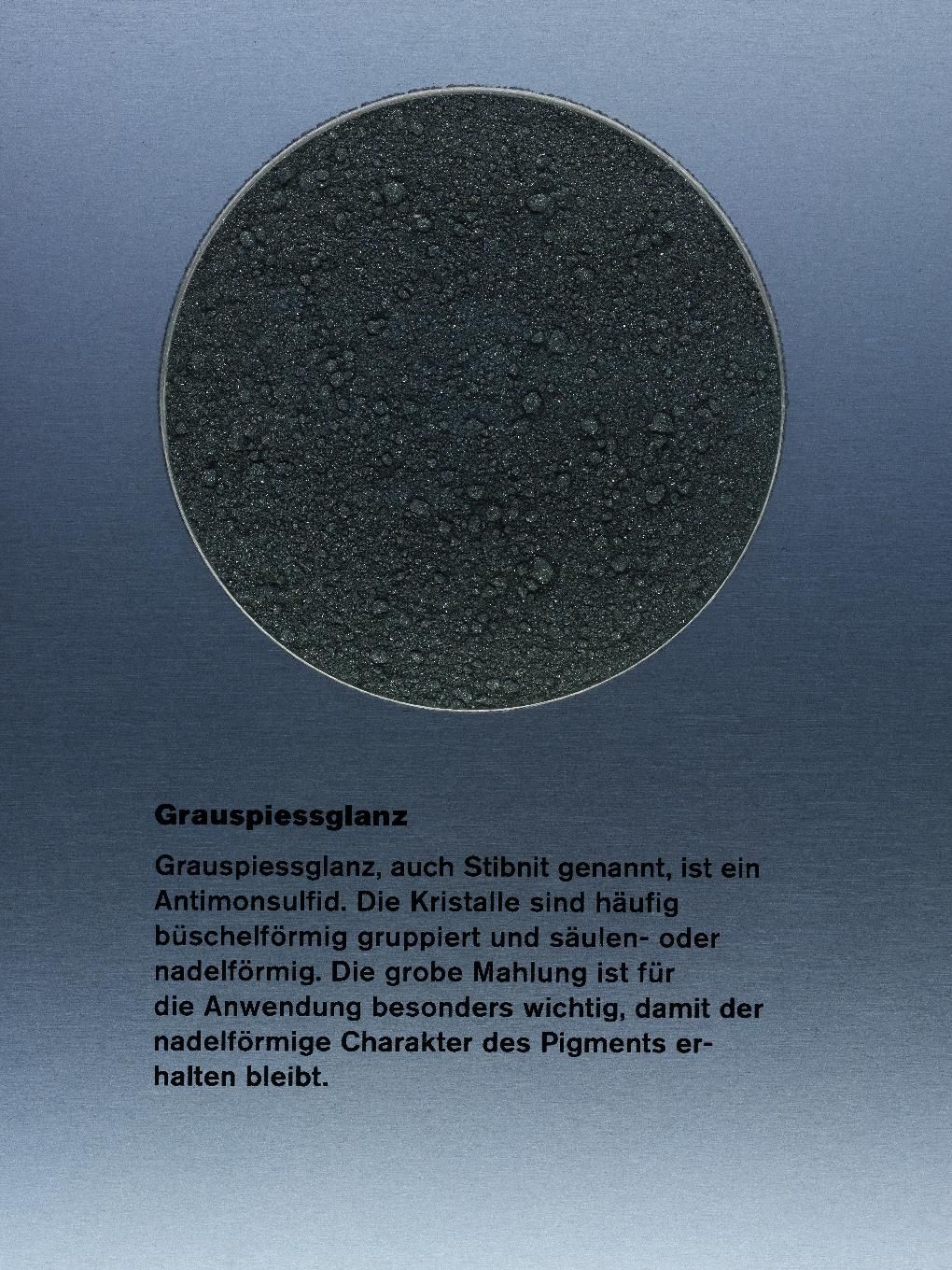
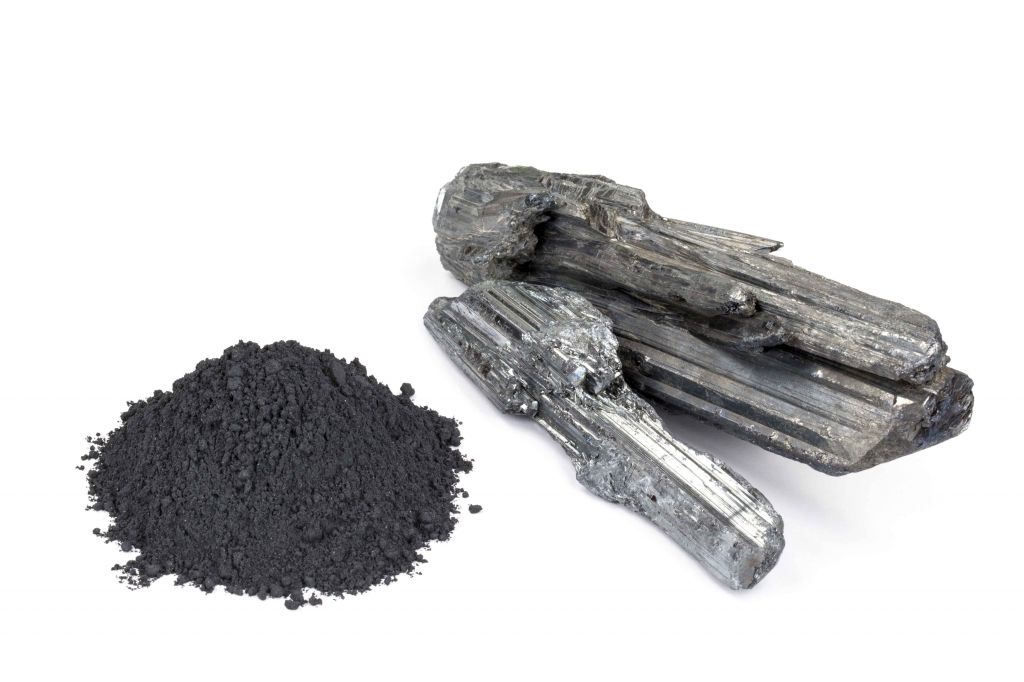
The frequently occurring Stibnite, also called antimonite, is an antimony sulfide mineral. Due to the needle or pike-like appearance of the antimony sulfide crystals, other names for antimony include “grey sword glint” and “sword glint”. Its color is a glittering metallic grey-black, sometimes with a bluish gleam. For its use in painting, a rough grinding is important, so that the needle-like character of the pigment is not lost. Like the pigments pyrite, bismuth, and lead white, antimony was used to create many different color nuances of grey in painting, architecture design, and the coloring of furniture. Antimony was an important grey pigment especially in Renaissance painting, where it was used as underpaint, mixed with lead white and other pigments to create a shimmering silver-grey color, e. g. in paintings by Correggio. You may also know this lustrous grey-metallic material as “kohl”: Ground stibnite was used as eye-paint as early as in ancient Egypt. Until today, it is available in many North African countries as black eye make-up under the name “kohl”. The largest sources for antimony in Europe are in Romania. Today, the mineral stibnite also has considerable economical importance.
Downloads
- Chemical description: Antimony(III) sulfide
- Chemical Formula: Sb2S3
- Lightfastness - thinned: 8 (1 is bad, 8 is best)
- Lightfastness - medium: 8 (1 is bad, 8 is best)
- Lightfastness - concentrated: 8 (1 is bad, 8 is best)
- ColorIndex: PR 107.77060
- Suitability: Acrylics, Tempera, Watercolor / Gouache
- Colors: Black, Gray
- Forms: solid
- Solubility in water: insoluble
- Boiling point: 1150°C

-
For which application / techniques is Antimony suitable?
Antimony is suitable for Tempera, Watercolor / Gouache, Acrylics -
What color has Antimony?
Antimony has the colors Gray, Black. -
What Colorindex has Antimony?
Antimony has the Colorindex PR 107.77060. -
How lightfast is Antimony?
Antimony has the lightfastness thinned = 8, medium = 8, concentrated = 8 (1 is bad, 8 is best).