#64300
Tin (II) Chloride Dihydrate
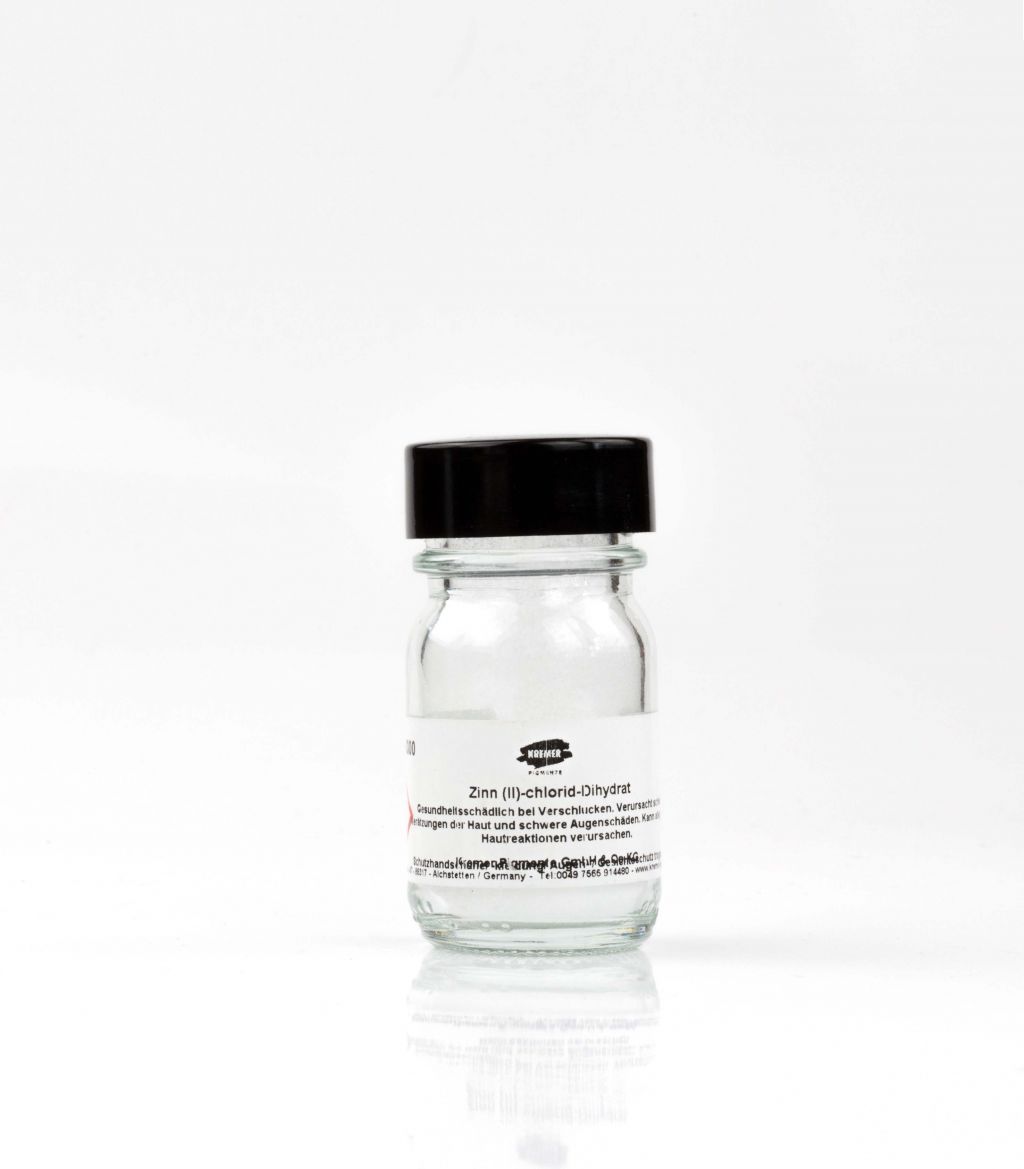
Buy Tin (II) Chloride Dihydrate:
Ordering information
Follow the safety information!
Please read the material safety data sheet (MSDS)
Safety Information

GHS05-2
Corrosion

GHS08
Health Hazard

GHS09
Environment
Signal word: Danger
H290: May be corrosive to metals.
H302+H332: Harmful if swallowed or if inhaled.
H314: Causes severe skin burns and eye damage.
H317: May cause an allergic skin reaction.
H335: May cause respiratory irritation.
H373: May cause damage to organs through prolonged or repeated exposure.
H410: Very toxic to aquatic life with long lasting effects.
H302+H332: Harmful if swallowed or if inhaled.
H314: Causes severe skin burns and eye damage.
H317: May cause an allergic skin reaction.
H335: May cause respiratory irritation.
H373: May cause damage to organs through prolonged or repeated exposure.
H410: Very toxic to aquatic life with long lasting effects.
P260: Do not breathe dust/fume/gas/mist/vapours/spray.
P273: Avoid release to the environment.
P280: Wear protective gloves/ clothing/ eye/ face protection.
P303+P361+P353: If on skin (or hair): Take off immediately all contaminated clothing. Rinse skin with water/shower.
P304+P340+P310: If inhaled: Remove person to fresh air and keep comfortable for breathing. Immediately call a poison center or doctor.
P305+P351+P338: If in eyes: Rinse cautiously with water for several minutes. Remove contact lenses and continue rinsing.
P273: Avoid release to the environment.
P280: Wear protective gloves/ clothing/ eye/ face protection.
P303+P361+P353: If on skin (or hair): Take off immediately all contaminated clothing. Rinse skin with water/shower.
P304+P340+P310: If inhaled: Remove person to fresh air and keep comfortable for breathing. Immediately call a poison center or doctor.
P305+P351+P338: If in eyes: Rinse cautiously with water for several minutes. Remove contact lenses and continue rinsing.
Chloride of tin, the tin salt of hydrochloric acid. It forms colorless or grayish-white, greasy shiny crystals. It dissolves easily in ethanol and in a little water. Tin(II) chloride is used, among other things, in chemical analysis, in dyeing for the reduction of indigo and iron and manganese oxide on witnesses, as a mordant, namely for dyeing with cochineal.
Downloads
- Chemical description: Formula: SnCl2 * 2 H2O
- Chemical Formula: SnCl2*2H20
- Forms: solid
- Solubility in water: 1187 g/l (20°C)
