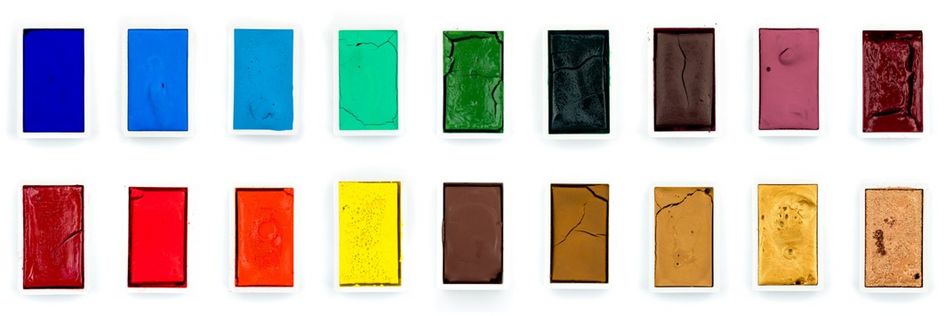
FAQ - Watercolor
How do I know how much watercolor medium to use?
Every pigment is different in terms of how much watercolor medium is needed to make a good paint. There is also not one perfect measurement for each color, rather a range of ratios that yield satisfactory results.
If you would like to standardize your recipes for watercolor, using a kitchen/jewelry scale that measures in hundreths of a gram will help a lot. Keep notes of your ratios and wait until the pans are fully dry before determining which one you think is best. Try making 2-3 small batches of the same pigment with a different ratio of watercolor medium for each. When you first add the medium, aim for a viscosity similar to melted chocolate or maple syrup.
Once you start mixing, you will see it quickly gets thicker, but starting with this viscosity is a good rule of thumb. If the mixture looks very dry/matte while you are mulling, you can add more. However, if you take a long time to mull, the mixture may have lost water through evaporation. If it’s too dry to mull, but looks shiny like oil paint, just add in a few drops of water to make it workable.
Note: The abrasion resistance of the watercolor is also influenced by the absorbency of the paper. We therefore recommend using the paper you will be working on for testing.
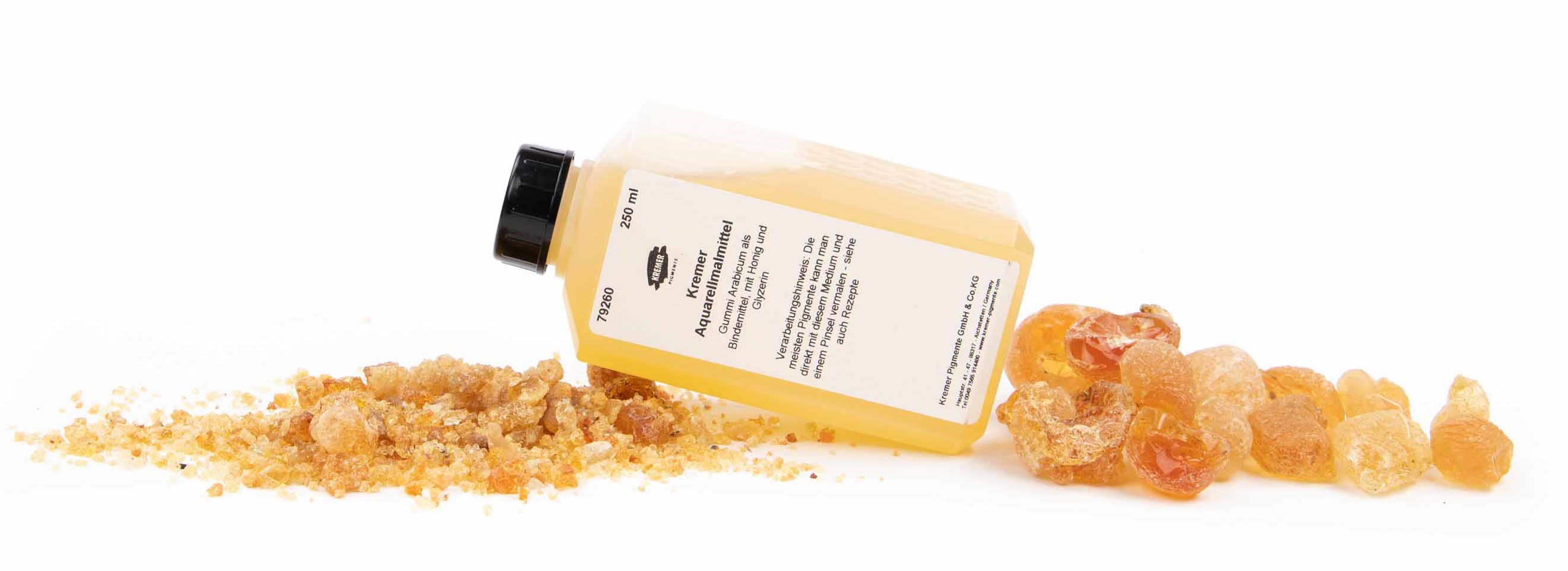 Further information:
> Kremer Watercolor Medium (#79260)
Which pigments can I use to make my own watercolors?
Most pigments work well with the Kremer Watercolor Medium (#79260). Pigments used for watercolor should be as fine as possible, because it is usually difficult to bind larger particles, such as coarse-grained earth pigments or sand. Reactive pigments, such as copper based pigments, manganese, phosphates or cobalt, are not recommended for watercolor.
The easiest pigments to mix are cadmium -, cobalt -, and ultramarine pigments, iron oxides, and earth pigments. Synthetic-organic pigments are difficult to moisten, they dry slowly, need a lot of binding medium and have to be ground thoroughly to remove larger particles that will cause lumps in the paint. Pearlescent pigments, on the other hand, should not be ground too much. They consist of tiny flakes, which can slow down drying of the paint later.
 Further information:
Can I mix two pigments to make a custom color?
Yes, you can absolutely make mixtures. The best way to do this is mulling the two colors separately, then combining the two liquid paints together a bit at a time to get the color just the way you like it. The reason for this is that pigments have different levels of absorbency, and varying degrees of difficulty for mulling/dispersion. When you do each color separately, it’s actually easier and more reliable. Don’t forget to paint a diluted test watch when making the combination- the color can look one way concentrated on the palette, an another way when actually used as a watercolor on paper.
I made my own watercolor pans, why are they cracked?
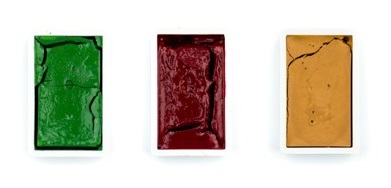 This is normal and common. In some cases it can indicate that not enough binder was added. If the paint looks very dry, matte and crumbly, you did not add enough watercolor medium and the paint may be difficult to wet and pick up color. If the paints wet easily and are not crumbly, the cracking is just a cosmetic issue.
There are ways to reduce the amount of cracks in your finished pans:
1. Fill the pans in 2-3 layers, allowing them to dry in between.
2. After mulling you paint on the palette, allow it to thicken and dehydrate a bit before transferring it into the pan. You will have less shrinkage when it finishes drying in the pan.
Why are the watercolor pans I made still wet and sticky?
If your finished paints remain soft, sticky, or liquid after a long drying period (a week or more) it indicates that too much binder was used. These paints are still good to paint with but they will always be a little soft and delicate. If you wan to change them, you can scrape out the paint onto your palette, adding enough water to make them into a liquid thin enough to mull. Then, add more pigment and mull your paint again before returning it to the pan. The amount you add is up to you and depending on how gooey the paint is. By adding more pigment, you are changing the pigment:binder ratio to make it less sticky.
My pans started out nice, but now that I’ve been using them a while, they are very dry. Why?
This can happen with any brand of pan, or one that you’ve made. It’s a result of oversaturating your pans with water when working. Adding a lot of water directly to the pan causes too much of the gum arabic in the mixture to be dissolved, and it is “sucked out” of the pan. If you need a lot of one color, use a well palette or small dish for the diluted paint that you are working with, instead of adding a lot of water to the pan.
Do I need a muller to make watercolors?
Yes and no. For some pigments, particularly earth colors, you can mix small batches of watercolor using the bottom of a sturdy offset palette knife. You can also use a mortar and pestle that is not otherwise used for food. A muller does not grind a pigment finer; it emulsifies paint by dispersing the pigment particles within the liquid medium. A muller will make a smoother paint in shorter amount of time than solely using palette knives. For certain pigments (like phthalo and quinachridone colors) the muller is more of a requirement because the particles are so fine and difficult to disperse. When using a muller, you still need to use palette knives to mix in the watercolor medium until there are no dry patches of pigment before switching to the muller.
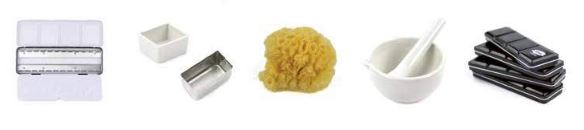 Further information:
How can I make gouache? Does Kremer sell gouache?

Kremer makes over 130 of our pigments into watercolor pans. Kremer-made watercolor is only sold in pans, not tubes. We don’t sell what is commonly called gouache- tubed watercolors (or sometimes acrylic paints) that are standardized using fillers or other ingredients to make the opacity and texture the same for all paints. The vast majority of the watercolors we sell are single pigments without fillers. Some of these pigments are by nature very opaque and could be called gouache but we do not make that distinction. If you like an overall opaque look, try adding tiny amounts of Titanium White watercolor to you other colors. If you are making paint from scratch, you can do this as well.
If you make your own paint, you can also use Chalk from Champagne (#58000) as a filler, which gives the paint a smooth texture and makes it easier to fill into a tube.
Further information:
Can I also make watercolors using Color Pastes?
Of course, you can also mix color pastes with the gum arabic solution, but this is only recommended if you want to use the watercolor immediately. It is better to work with dry pigments for colors that you want to store in pans. As the color pastes already contain water, the paint made with them will be thinner and will therefore dry more slowly.
Further information:
Why are cobalt violet and manganese violet not recommended for watercolors?
Cobalt violet and manganese violet can be used as watercolor and painted without any problems. However, we do not recommend pouring these colors into pans, as they do not dissolve after drying.
How can I remove watercolor residues from my working materials?
It is best to remove paint residues in mortars or on plates for grinding and mullers with a dry cloth and dispose of dried paint in the waste. This minimizes the amount of pigment that ends up in waste water. Work surfaces, brushes and tools can be cleaned with water and Olive Oil Soap (#78045). Stubborn stains in mortars or on plates for grinding can be easily removed with scouring milk.
