seguridad_sicherheit.jpg

Seguridad

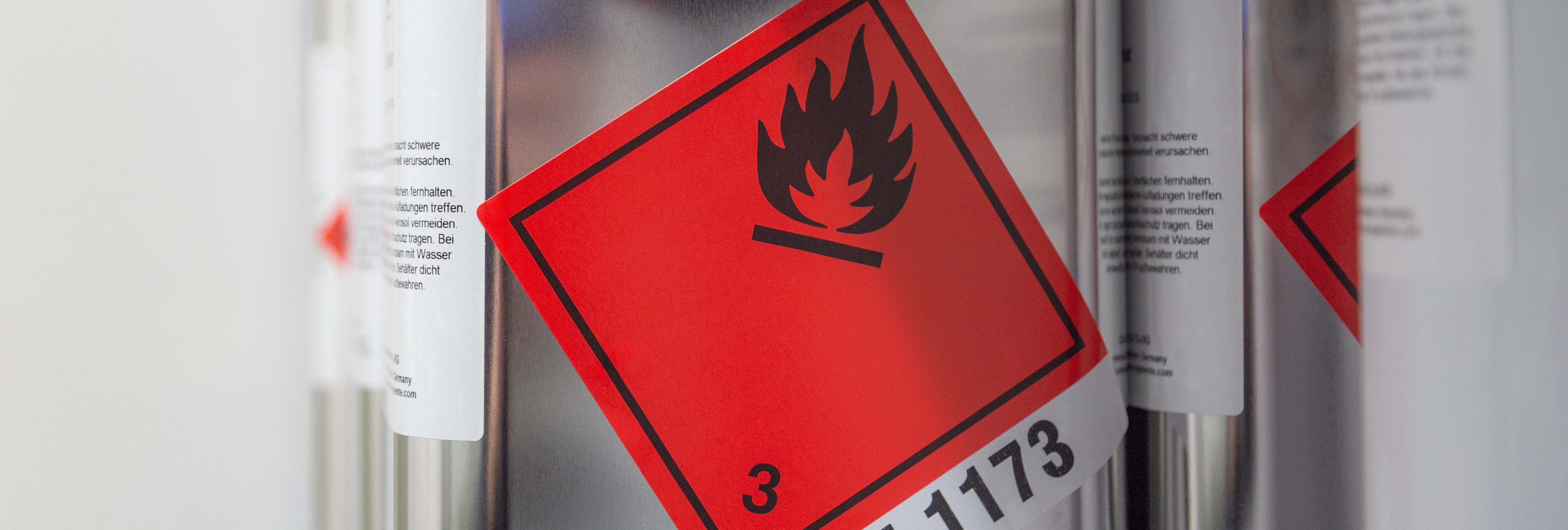
Hazard identification and safety advice on the product labels are abbreviated. Detailed information, tips on safety, handling and storage for each product can be found in the info sheets and material safety data sheets.

Please find under Shipping & Ordering Information the explanations and formulars for the icons, which are deposit at the products.

General Procedures for Art Materials and Hazardous Substances

  • Keep products out of reach of children!

  • Please be careful when handling binders and pigments.

  • Do not eat, drink or smoke at work. Painting materials and food do not belong onto the same table and not into the same refrigerator. You should neither put a brush in your mouth, nor touch the canvas with greasy fingers.

  • The exposure to large quantities of solvent can cause nausea, headache, and drowsiness. Solvents should not be used in living rooms.

  • Never use products for skin painting, food preparation or other uses they were not intended for.

  • Keep your work area and utensils clean. Wet mop to pick up dust.

  • Keep your work area well ventilated. Wear a NIOSH approved dust mask while handling pigments. Particular caution is necessary when using needle-like, fibrous or toxic pigments. Dust formation should be avoided, even with non-toxic pigments.

  • Wash up after use – clean yourself.

  • Read the label! When transferring art materials to other containers, transfer the original label onto the jar.

  • Usage instruction for bottles and jerry cans - This usage instruction contains important information in connection with German law governing product safety in order to ensure the safety and protect the health of users. It must be ensured that this information is brought to the attention of the users (Directive 2001/95/EC on General Product Safety).

Hazard identification and safety advice on the product labels are abbreviated. Detailed information, tips on safety, handling and storage for each product can be found in the info sheets and material safety data sheets in our shop.
 

Handling and Warning Notices:

  • Spontaneous Combustion of Linseed oil and other Drying Oils
    Drying oils dry by reaction with oxygen. If you absorb linseed oil with a cloth or paper, the surface is enlarged greatly. This will speed up the drying process, which leads to a heat build-up and at the worst to spontaneous combustion. Therefore it is important to spread the cloth or paper soaked with linseed oil and let it dry in a safe place prior to disposal.

  • Kremer Pigments for Soaps and Cosmetics?
    Our pigments, colorants and binders are intended for conservators, artists and craftsmen. Kremer Pigmente does not supply products for cosmetic use. We do not handle the products according to cosmetic standards and regulations, and some products can cause allergies when applied on human skin.

  • Can Kremer Pigmente Linseed Oil and Walnut Oil be eaten?
    Products sold by Kremer Pigments are supposed to be used for conservation, art and other crafts. Oils bought from Kremer Pigments are not suitable for human consumption, not even natural linseed oil or walnut oil!

  • Pets and Paints
    Some pets just cannot resist to eat egg tempera or other paints. Please try to keep your cat or dog away from paints and pigments. Even if the paint is non toxic for humans, some substances may be harmful, especially for cats.

  • Storing Pigments
    Provided that pigments are kept dry and in a closed container they have no expiration date. If pigments become wet, they may agglomerate and will have to be ground before use. Most of our pigments are supplied in 100 g or 1 kg plastic bags. We offer PVC jars, glass bottles, polyethylene and metal buckets for storage containers.
    Please notice: Usage instruction for bottles and jerry cans.

GHS and CLP - New Hazard Labeling and Classification

CLP is the Regulation on classification, labelling and packaging of substances and mixtures. This Regulation aligns previous EU legislation on classification, labelling and packaging of chemicals to the GHS (Globally Harmonised System of Classification and Labelling of Chemicals).

Its main objectives are to facilitate international trade in chemicals and to maintain the existing level of protection of human health and environment. The GHS is a United Nations system to identify hazardous chemicals and to inform users about these hazards through standard symbols and phrases on the packaging labels and through safety data sheets (SDS).

The CLP Regulation was published in the Official Journal 31 December 2008 and entered into force on 20 January 2009. According to the Regulation, the deadline for substance classification according to the new rules will be 1 December 2010. For mixtures, the deadline will be 1 June 2015.
 

CLP-Pictograms

The new CLP-pictograms are in the shape of a red diamond with a white background, and will replace the old orange square symbols which applied under the previous legislation.

Physical hazards pictograms

Explosive Flammable Oxidizing
     
 
Compressed Gas Corrosive  
     

Health hazards pictograms

Toxic Health Hazard Irrititant
     

Enviromental hazards pictograms

   
Environmentally
Damaging


Signal Words

The CLP Regulation introduces two new signal words, that inform about the degree of danger

  • »DANGER« – if the chemical has a more severe hazard
     
  • »WARNING« – in case of less severe hazard
     

H and P statements

H and P statements will replace the R and S statements.

Hazard (H-) Statements are aligned in 3 categories. The first digit determines the group (2 for physical hazards, 3 for health hazards, 4 for environmental hazards). The last 2 digits are the serial numbers.

Precautionary (P-) Statements are aligned in 5 categories. The first digit determines the group (1 for general statements, 2 for prevention statement, 3 for response statements, 4 for storage statements, 5 for disposal statements). The last digits are the serial numbers.
 

Download GHS and CLP – New Hazard Labeling and Classification, pdf
 

Pigments with toxic heavy metals

The products listed below are not recommended for use in hospitals or schools.
Keep out of reach of children. Do not use during pregnancy.

First aid: If swallowed, seek medical advice immediately.

The following pigments contain toxic heavy metals:

  • Antimony - Naples Yellow, Antimony, Antimony Red.
    Longer cumulative effects can damage the lungs.
     
  • Arsenic - Orpigment, Realgar, Conichalcite.
    Acute poisoning can lead to death, cumulative effects can be carcinogenic.
     
  • Borates - Borax, Boric Acid, Viridian Green (chromium oxide hydrate green)
     
  • Lead - Naples Yellow, Lead White, Red Lead, Massicot, Zinc White (white seal), Galena, Colored glass powder, Lead Tin Yellow.
    Cumulative effects lead to lead poisoning and nerve damage.
     
  • Cadmium - All cadmium pigments 21010 to 21540 and 42050, 44500 and 44510 and some colored glass flours contain cadmium.
    The risk from the pigment itself is low. Burning cadmium pigments creates a toxic combustion product.
     
  • Cobalt - All cobalt blue, green, yellow, violet, smalt.
    The spinels cobalt blue and cobalt green are considered toxic in some countries, but not in others, according to various guidelines. Harmful if inhaled or swallowed, risk of cumulative effects.
     
  • Copper - Azurite, Malachite, Chrysocolla, Verdigris, Egyptian Blue, Han Blue, Ploss Blue, Blue Verditer, Phthalo Blue and Green.
    Harmful if inhaled or swallowed.
     
  • Manganese - Manganese brown, black, gray, violet, purple, umber.
    Cumulative effects lead to nerve damage.
     
  • Nickel - Nickel titanium yellow, Indian yellow imitation.
    Cumulative effects damage the kidneys and lead to allergic reactions.
     
  • Mercury - Vermilion natural and synthetic.
    Cumulative effects lead to poisoning and nerve damage.

General Information

This usage instruction contains important information in connection with German law governing product safety in order to ensure the safety and protect the health of users. It must be ensured that this information is brought to the attention of the users (Directive 2001/95/EC on General Product Safety).

In the case of UN dangerous goods packaging, all stipulations and notes on the respective UN approval relating to proper use of packaging are to be respected and communicated to any and all parties using this packaging for dangerous goods. Only the respective closures licensed in the respective approval may be used. UN approvals can be viewed at the homepage of the Bundesanstalt für Materialforschung und –prüfung (http://www.tes.bam.de/php/d-bam/index.php?id=zulassung).

Storage

The recommended storage temperature for bottles / jerry cans should be between + 5°C and +40°C. Higher temperatures may cause deformity of the bottles / jerry cans. The bottles / jerry cans must not be exposed to direct sunlight in order to avoid the containers’ mechanical properties being negatively affected.

Use / filling

The bottles / jerry cans should only be used up to 5 years after the production date. Please make sure that the packaging and in particular the sealing zones are not damaged / negatively affected when emptying and filling the containers. Avoid any and all mechanical or thermal damage to the bottles / jerry cans. Please use the degassing closures for gaseous goods.

Filling hot substances

Do not stack the bottles / jerry cans while they are still warm. The bottles / jerry cans may only be closed after having cooled down, or only with a degassing closure in order to ensure pressure equalization. The bottles / jerry cans should be able to cool off quickly. If they maintain higher temperatures (60-80°C) for a lengthy period, it could cause permanent deformation of the jerry cans. The bottles / jerry cans must be filled in an upright position on a level surface. Floors or areas with openings or unsuitable pallets (light pallets) should be avoided.

Chemical stability

Our products without UN approval may only be used as packaging for dangerous substances and mixtures in accordance with Regulation (EC) no. 1272/2008 if the user ensures that the requirements set out in Article 35 of this Regulation have been adhered to. This inspection is to be conducted by the user under his own responsibility. In particular, it is to be inspected whether the respective content does not damage the material constituting the packaging and fastenings or can react with these to form hazardous compounds. You will find information on the chemical stability of basic materials that are used in our catalogue.