securité_sicherheit.jpg

​Recommandations de securité

Hazard identification and safety advice on the product labels are abbreviated. Detailed information, tips on safety, handling and storage for each product can be found in the info sheets and material safety data sheets.

Please find under Shipping & Ordering Information the explanations and formulars for the icons, which are deposit at the products.

S'il vous plaît noter que les recommandation de securité sont disponibles qu'en langue anglais.

General Procedures for Art Materials and Hazardous Substances

  • Keep products out of reach of children!

  • Please be careful when handling binders and pigments.

  • Do not eat, drink or smoke at work. Painting materials and food do not belong onto the same table and not into the same refrigerator. You should neither put a brush in your mouth, nor touch the canvas with greasy fingers.

  • The exposure to large quantities of solvent can cause nausea, headache, and drowsiness. Solvents should not be used in living rooms.

  • Never use products for skin painting, food preparation or other uses they were not intended for.

  • Keep your work area and utensils clean. Wet mop to pick up dust.

  • Keep your work area well ventilated. Wear a NIOSH approved dust mask while handling pigments. Particular caution is necessary when using needle-like, fibrous or toxic pigments. Dust formation should be avoided, even with non-toxic pigments.

  • Wash up after use – clean yourself.

  • Read the label! When transferring art materials to other containers, transfer the original label onto the jar.

  • Usage instruction for bottles and jerry cans - This usage instruction contains important information in connection with German law governing product safety in order to ensure the safety and protect the health of users. It must be ensured that this information is brought to the attention of the users (Directive 2001/95/EC on General Product Safety).

Hazard identification and safety advice on the product labels are abbreviated. Detailed information, tips on safety, handling and storage for each product can be found in the info sheets and material safety data sheets in our shop.
 

Handling and Warning Notices:

  • Spontaneous Combustion of Linseed oil and other Drying Oils
    Drying oils dry by reaction with oxygen. If you absorb linseed oil with a cloth or paper, the surface is enlarged greatly. This will speed up the drying process, which leads to a heat build-up and at the worst to spontaneous combustion. Therefore it is important to spread the cloth or paper soaked with linseed oil and let it dry in a safe place prior to disposal.

  • Kremer Pigments for Soaps and Cosmetics?
    Our pigments, colorants and binders are intended for conservators, artists and craftsmen. Kremer Pigmente does not supply products for cosmetic use. We do not handle the products according to cosmetic standards and regulations, and some products can cause allergies when applied on human skin.

  • Can Kremer Pigmente Linseed Oil and Walnut Oil be eaten?
    Products sold by Kremer Pigments are supposed to be used for conservation, art and other crafts. Oils bought from Kremer Pigments are not suitable for human consumption, not even natural linseed oil or walnut oil!

  • Pets and Paints
    Some pets just cannot resist to eat egg tempera or other paints. Please try to keep your cat or dog away from paints and pigments. Even if the paint is non toxic for humans, some substances may be harmful, especially for cats.

  • Storing Pigments
    Provided that pigments are kept dry and in a closed container they have no expiration date. If pigments become wet, they may agglomerate and will have to be ground before use. Most of our pigments are supplied in 100 g or 1 kg plastic bags. We offer PVC jars, glass bottles, polyethylene and metal buckets for storage containers.
    Please notice: Usage instruction for bottles and jerry cans.

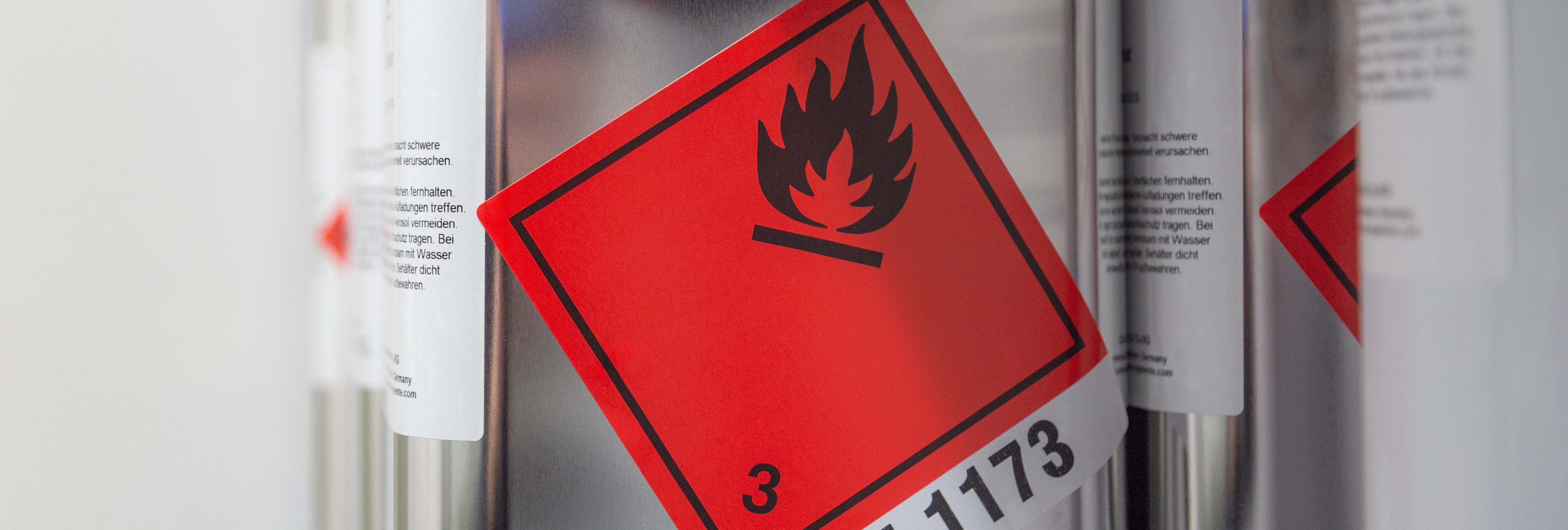
GHS and CLP - New Hazard Labeling and Classification

CLP is the Regulation on classification, labelling and packaging of substances and mixtures. This Regulation aligns previous EU legislation on classification, labelling and packaging of chemicals to the GHS (Globally Harmonised System of Classification and Labelling of Chemicals).

Its main objectives are to facilitate international trade in chemicals and to maintain the existing level of protection of human health and environment. The GHS is a United Nations system to identify hazardous chemicals and to inform users about these hazards through standard symbols and phrases on the packaging labels and through safety data sheets (SDS).

The CLP Regulation was published in the Official Journal 31 December 2008 and entered into force on 20 January 2009. According to the Regulation, the deadline for substance classification according to the new rules will be 1 December 2010. For mixtures, the deadline will be 1 June 2015.
 

CLP-Pictograms

The new CLP-pictograms are in the shape of a red diamond with a white background, and will replace the old orange square symbols which applied under the previous legislation.

Physical hazards pictograms

Explosive Flammable Oxidizing
     
 
Compressed Gas Corrosive  
     

Health hazards pictograms

Toxic Health Hazard Irrititant
     

Enviromental hazards pictograms

   
Environmentally
Damaging


Signal Words

The CLP Regulation introduces two new signal words, that inform about the degree of danger

  • »DANGER« – if the chemical has a more severe hazard
     
  • »WARNING« – in case of less severe hazard
     

H and P statements

H and P statements will replace the R and S statements.

Hazard (H-) Statements are aligned in 3 categories. The first digit determines the group (2 for physical hazards, 3 for health hazards, 4 for environmental hazards). The last 2 digits are the serial numbers.

Precautionary (P-) Statements are aligned in 5 categories. The first digit determines the group (1 for general statements, 2 for prevention statement, 3 for response statements, 4 for storage statements, 5 for disposal statements). The last digits are the serial numbers.
 

Download GHS and CLP – New Hazard Labeling and Classification, pdf
 

Pigments with toxic heavy metals

The products listed below are not recommended for use in hospitals or schools.
Keep out of reach of children. Do not use during pregnancy.

First aid: If swallowed, seek medical advice immediately.

The following pigments contain toxic heavy metals:

  • Antimony - Naples Yellow, Antimony, Antimony Red.
    Longer cumulative effects can damage the lungs.
     
  • Arsenic - Orpigment, Realgar, Conichalcite.
    Acute poisoning can lead to death, cumulative effects can be carcinogenic.
     
  • Borates - Borax, Boric Acid, Viridian Green (chromium oxide hydrate green)
     
  • Lead - Naples Yellow, Lead White, Red Lead, Massicot, Zinc White (white seal), Galena, Colored glass powder, Lead Tin Yellow.
    Cumulative effects lead to lead poisoning and nerve damage.
     
  • Cadmium - All cadmium pigments 21010 to 21540 and 42050, 44500 and 44510 and some colored glass flours contain cadmium.
    The risk from the pigment itself is low. Burning cadmium pigments creates a toxic combustion product.
     
  • Cobalt - All cobalt blue, green, yellow, violet, smalt.
    The spinels cobalt blue and cobalt green are considered toxic in some countries, but not in others, according to various guidelines. Harmful if inhaled or swallowed, risk of cumulative effects.
     
  • Copper - Azurite, Malachite, Chrysocolla, Verdigris, Egyptian Blue, Han Blue, Ploss Blue, Blue Verditer, Phthalo Blue and Green.
    Harmful if inhaled or swallowed.
     
  • Manganese - Manganese brown, black, gray, violet, purple, umber.
    Cumulative effects lead to nerve damage.
     
  • Nickel - Nickel titanium yellow, Indian yellow imitation.
    Cumulative effects damage the kidneys and lead to allergic reactions.
     
  • Mercury - Vermilion natural and synthetic.
    Cumulative effects lead to poisoning and nerve damage.

Informations générales

Ce mode d’emploi contient des informations importantes visées par la législation sur la sécurité des produits afin d’assurer la protection de la santé et la sécurité de leurs utilisateurs. Il convient de veiller à ce que les utilisateurs prennent connaissance de ces informations (directive 2001/95/CE relative à la sécurité générale des produits).

En utilisant des emballages pour matières dangereuses ONU, il est impératif de respecter l’ensemble des règlements et indications de la certification ONU régissant l’utilisation des emballages et d’informer quiconque va utiliser ces emballages pour matières dangereuses ou les remplir de matières dangereuses. Seules peuvent être utilisées les fermetures qui ont été autorisées dans le cadre d’une certification. Les certifications ONU peuvent être consultées sur le site Internet de l’Institut fédéral de la recherche et des essais sur les matériaux (Bundesanstalt für Materialforschung und -prüfung):
http://www.tes.bam.de/php/dam/index.php?id=zulassung

Stockage

Les bouteilles et les bidons munis d’un système de purge de l’air doivent être impérativement entreposés à la verticale. La température de stockage recommandée des bouteilles et bidons doit être comprise entre + 5 °C et + 40 °C. Des températures plus élevées peuvent entraîner des déformations des bouteilles et bidons. Les bouteilles et bidons ne doivent pas être exposés directement à la lumière du soleil afin que leurs propriétés mécaniques ne soient pas diminuées.

Utilisation, remplissage

Veuillez ne plus utiliser les bouteilles et les bidons cinq ans après la date de leur fabrication. Veuillez vous assurer que lors du vidage et du remplissage, l’emballage et en particulier les zones d’étanchéité, ne sont pas endommagés ou n’ont pas perdu de leurs propriétés. Évitez tout dommage mécanique et thermique aux bouteilles et bidons. Veuillez utiliser des valves de dégazage pour les produits de remplissage dégageant des gaz.

Remplissage à chaud

N’empilez pas les bouteilles et les bidons pendant qu’ils sont encore chauds. Les bouteilles et les bidons doivent être refermés uniquement après leur refroidissement ou après l’utilisation d’une valve de dégazage pour assurer un équilibrage des pressions. Les bouteilles et bidons doivent pouvoir refroidir rapidement. Lorsqu’ils sont stockés longtemps à des temperatures élevées (60 à 80 °C), il peut se produire une déformation permanente du bidon. Les bouteilles et bidons doivent être remplis debout, sur une surface plane. Il faut éviter les sols et les surfaces ayant des ouvertures et les palettes inappropriés (palettes légères).

Résistance aux produits chimiques

Nos produits sans certification ONU peuvent être utilisés pour l’emballage de substances et de mélanges dangereux conformément au règlement (CE) n° 1272/2008 si l’utilisateur assure que les exigences de l’article 35 de ce règlement sont absolument respectées. Ce contrôle doit être effectué sous la responsabilité propre de l’utilisateur. Il convient en particulier de vérifier si les matériaux dont sont constitués les emballages et les fermetures ne sont pas susceptibles d’être endommagés par le contenu, ni de former avec ce dernier des composés dangereux. Pour obtenir des informations sur la résistance des matériaux utilisés, veuillez consulter notre catalogue.