Receta: Egg Tempera with Dammar and Linseed Oil
The word Tempera comes from Latin „temperare“ and means “to make mild” or “to control” which is probably referring to the fact that tempera paint combines materials which are usually unmixable. Mixing agents or emulsifier are used in order to blend resin, oil and water-dilutable colors without the use of odorous solvents. Tempera paint can be used for nuanced art work since it is hardly runny. The dry paint is water-resistant.

Procesamiento
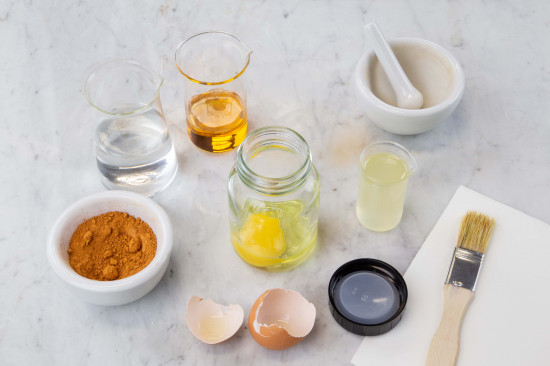
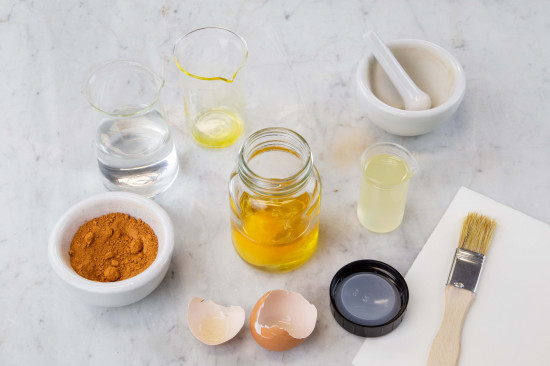
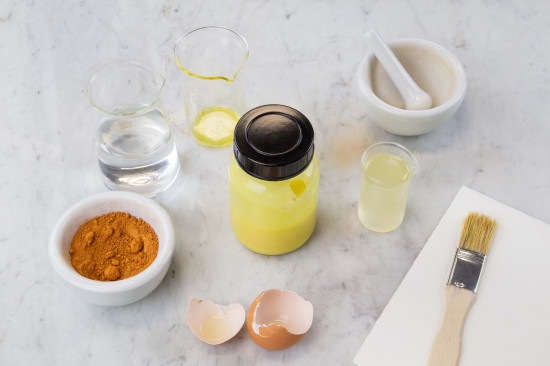
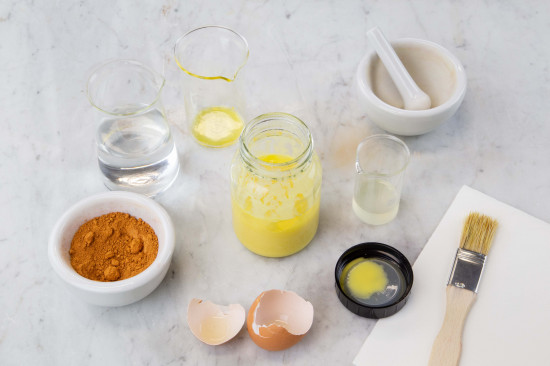
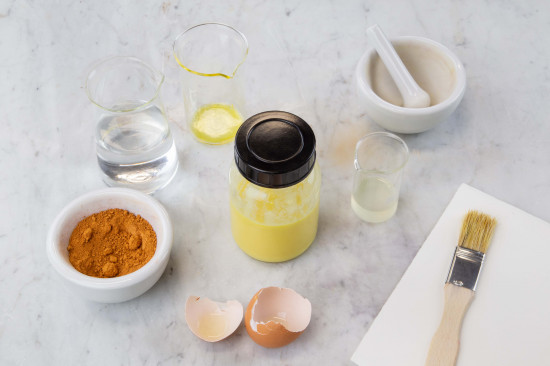

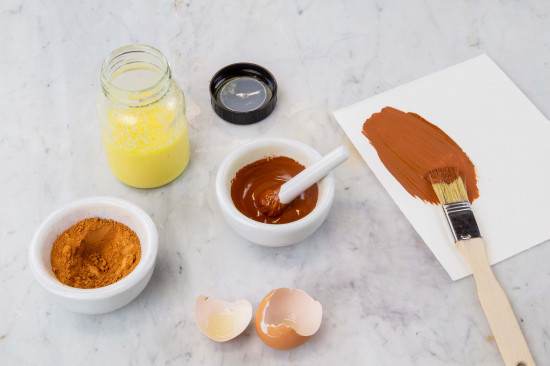
Ingredientes
| 1 parte(s) | Aceite de linaza, sueco (#73020) |
| Aceite de linaza, prensado en frío (#73054) | |
| Aceite de linaza, para laca (#73300) | |
| Alternativa: Barniz al aceite de linaza (#73100) |
|
| 1 parte(s) | Barniz dammar, brillante, con filtro UV (#79300) |
| 1 parte(s) | Agua destilada (#65000) |
| 1 parte(s) | Fresh egg |
| Glass with a screw cap | |
| mortar and pestle, or medium size glass muller and glass palette | |
| Pigmento |
Nota
If you use Linseed Oil Varnish (#73100), the paint will dry faster than paint made with cold-pressed linseed oil. For egg tempera, you should only use distilled or demineralized water. Tap water can cause flocculation of the mixture. Boiling the water before use will prolong the stability of the paint. As a preservative, you can add a drop of Clove Oil (#73700).
